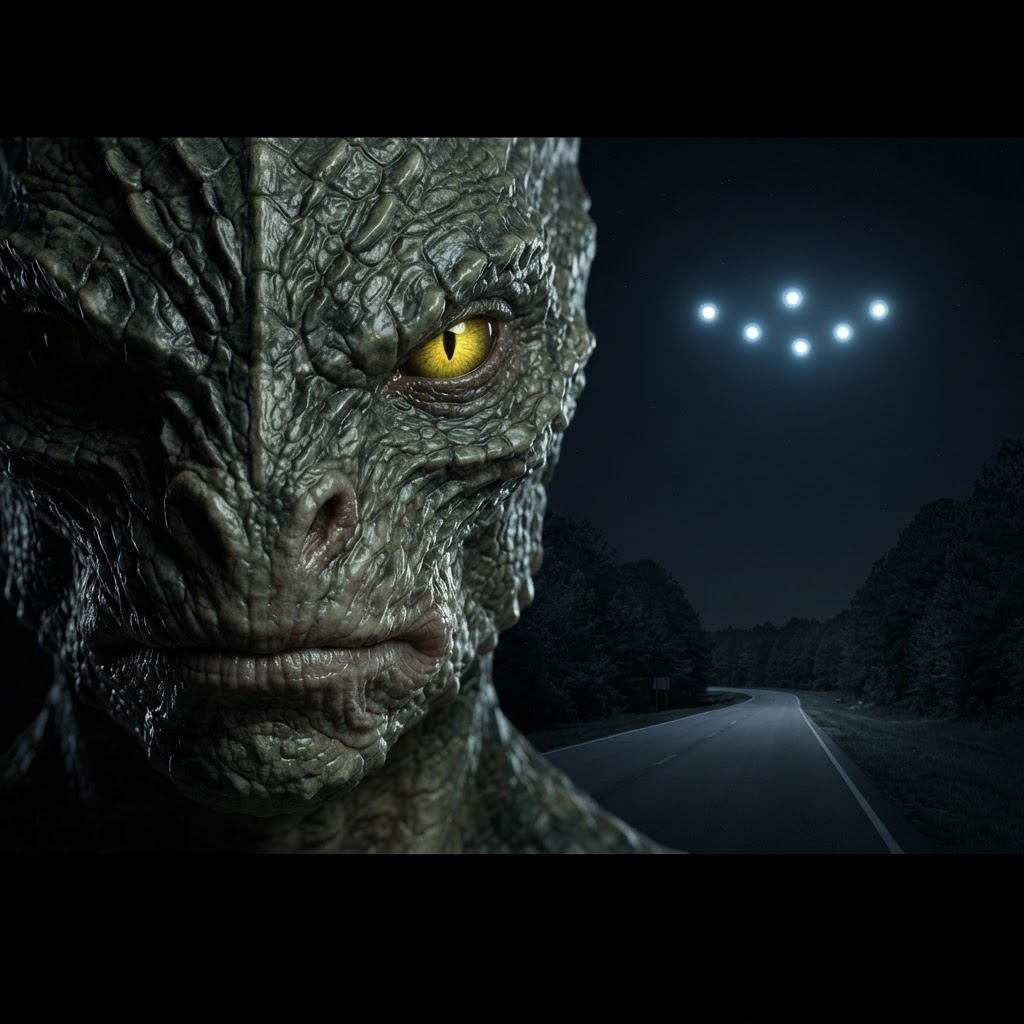
You are looking at the sky over Tehran when the lights begin changing color.
Not one light. Not a clean aircraft silhouette. A strange, illuminated shape appears to hover, drift, and pulse above one of the most watched cities on Earth. Then another video surfaces. Then another. Different angles. Different voices. The same impossible question.
The object that refused to look ordinary
Videos circulating from the night of September 19 into September 20 show a bright, multicolored object or cluster of lights over Tehran. Reports also placed similar lights over other parts of Iran. The footage is short, compressed, and difficult to authenticate. That matters. A viral video is not a radar track, and a dramatic clip is not proof of an extraterrestrial craft.
But dismissing it as meaningless is just as lazy as declaring an alien invasion. The interesting part is the pattern: the object appears luminous, changes color rapidly, and seems to hold position or move in ways viewers struggle to classify. Some observers have suggested a drone. Others have suggested a kite, aircraft, starlink-like satellite activity, or an unfamiliar military platform.
That uncertainty is exactly what makes the story spread. You are not watching a clean answer. You are watching a public argument unfold in real time, with every new clip adding confusion instead of clarity.
Why Tehran has a longer memory than most cities
For Iran, unexplained lights over the capital do not exist in a vacuum. In September 1976, an object reported over Tehran triggered one of the most famous military UFO encounters in modern history.
According to the historical account, civilians reported a brilliant object over the city. An Iranian Air Force F-4 Phantom was sent to investigate. As the jet approached, the pilot reportedly experienced equipment problems. A second F-4 followed. The encounter became famous because the pilots described an object that appeared able to move rapidly and because the incident report recorded concerns involving communications, instrumentation, and weapons control.
The most repeated version of the story says one aircraft lost the ability to fire when the pilot attempted to engage the object. The details have been debated for decades. Some explanations point toward equipment malfunction, misidentification, atmospheric effects, or a chain of ordinary events amplified by incomplete records. Others see the report as evidence of an encounter that military systems could not explain.
Either way, the 1976 case created a psychological tripwire. When a glowing object appears over Tehran now, people do not see only a light. They remember the jets. They remember the reported failures. They remember the idea that something entered Iranian airspace, drew military attention, and left without offering an explanation.
The videos are exciting. The missing data is more important.
There is a trap in every modern sighting. Phones give you more footage, but not necessarily more information. A camera can show color and apparent motion while hiding distance, altitude, scale, speed, and depth. A light that appears to hover may be moving toward the camera. A light that seems to dart may simply be attached to a moving platform viewed through a shaky lens.
That does not mean every witness is mistaken. It means the central question is not whether a video looks strange. The central question is whether multiple independent observations preserve the same details after experts examine them.
For the Tehran footage, the public record remains incomplete. There is no verified chain of custody for every clip. The original files are not always available. Audio, location, camera direction, and exact timestamps may be missing. Without those pieces, the footage can support a mystery, but it cannot settle one.
And yet, the timing gives the story teeth. Iran is already a tense environment. Airspace concerns, drones, military activity, and public fear can all produce unusual observations. That makes the sighting easier to explain in one sense and harder to interpret in another. In a crowded sky, ordinary objects become difficult to identify. In a frightened city, every unexplained light can feel like a warning.
Three explanations, and the problem with each one
The drone explanation is the most practical. A drone can carry bright lights, hover, maneuver, and appear mysterious at night. But a drone explanation still needs to account for the apparent size, color changes, flight path, and reports from different locations. Saying drone is a starting point, not an investigation.
The kite or advertising-object explanation is also possible. A large object illuminated from below can look enormous against a dark sky. Wind can create strange motion. A camera can exaggerate the effect. But that theory depends on the object maintaining a shape and light pattern that the available clips do not clearly reveal.
The secret-aircraft explanation is more dramatic. Iran’s skies have been watched by competing militaries for decades. A classified platform, test vehicle, or surveillance system could create sightings that officials refuse to identify. But secrecy is not evidence of alien origin. A secret aircraft is still an aircraft, and the footage alone cannot tell you who built it.
Then there is the possibility people least want to discuss because it is the least satisfying: several separate objects, filmed from different places, interpreted as one event. Viral stories compress uncertainty. A string of unrelated lights can become a single craft within hours.
What would turn this from a viral mystery into a real encounter?
Look for original uploads, not reposts. Look for consistent stars, landmarks, and horizon lines. Compare the apparent movement against known aircraft routes and satellite passes. Find out whether witnesses saw sound, heat, acceleration, or only changing lights. Check whether multiple cameras captured the same object at the same moment.
Most importantly, watch for the detail that cannot be explained by editing: a sudden change in direction, a measured acceleration, a disappearance without a visible path, or a physical interaction witnessed by more than one person. Even then, extraordinary movement needs careful measurement. Human perception is powerful, but at night it is also vulnerable to distance and perspective errors.
The 1976 Tehran incident remains compelling because it involved trained military pilots and a written account, not only a blurry social media clip. That does not make every detail proven. It does explain why today’s videos feel heavier than an ordinary light in the sky.
The question nobody in Tehran can answer yet
Was the new object a drone, a kite, an aircraft, a coordinated light display, or something that does not fit any familiar category? Right now, the honest answer is that the videos do not prove which one.
But if the 1976 parallel is what brought this sighting back into the public conversation, the deeper warning is not that history is repeating. It is that the same kind of uncertainty can return whenever something strange appears above a city and no authority can explain it fast enough.
You do not need to believe every claim to recognize the risk of being unprepared. If the next sighting is harmless, preparation costs you little. If it is not harmless, waiting for an official explanation may cost you everything.